
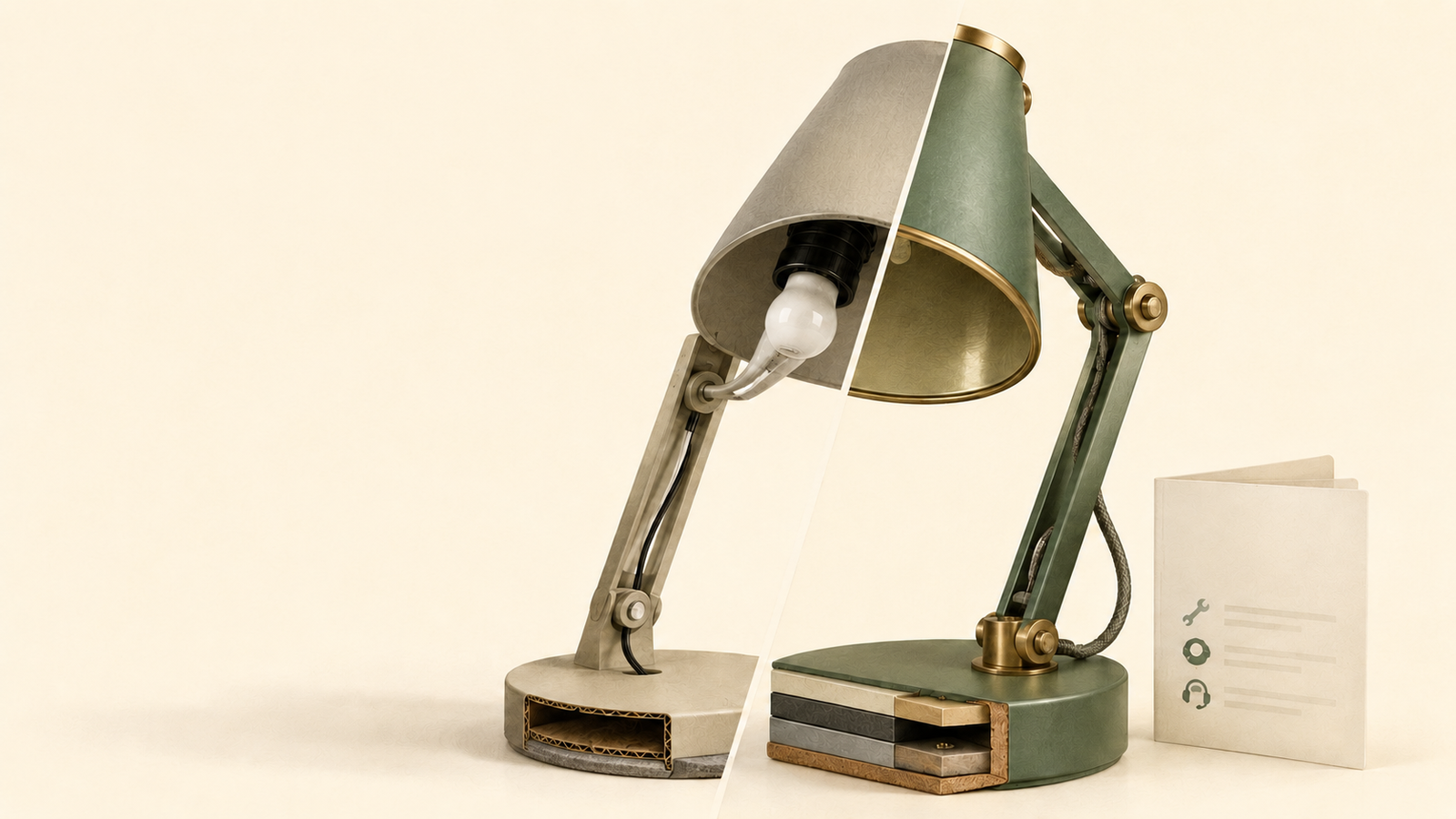
Cheap and expensive products often do the same basic job. The difference in price may reflect better materials, performance, durability, support or convenience. It may also reflect branding, marketing or features you will never use.
Last reviewed: August 23, 2026. Prices, product quality and support vary by category, seller and country, so compare the actual products rather than relying on price alone.
An expensive product is worth the extra money only when it provides a benefit you will use, can verify and expect to keep long enough for it to matter. A cheap product is not automatically a poor choice. The useful question is not simply price versus quality. It is whether the extra price buys a meaningful improvement for your situation.
Price is a bundle
You may be paying for materials, performance, support, design, distribution, marketing and profit at the same time.
Premium can be real
A higher price may buy better comfort, consistency, durability or repair support when the evidence supports it.
Cheap can be sensible
A simpler product may be the right choice when you use it rarely, face little risk or only need the basic function.
Brand is not proof
A familiar name, attractive packaging or a long feature list does not automatically mean better value.
What does a product price actually include?
The price on a product does not represent one single thing called quality. It is the result of several costs and decisions being combined into one number.
A product’s price may include its materials, manufacturing, testing, labour, shipping, storage, retail costs, customer support, marketing, brand position and profit. Some of those elements can improve your experience. Others may have little to do with how well the product performs.
That is why two products can look similar while having different prices. The more expensive product may be better made, or it may simply be sold through a more expensive channel with a larger marketing budget. You need to separate the useful differences from the invisible costs that do not help you.

| What the price may reflect | Possible benefit | What to look for |
|---|---|---|
| Materials and build | Better feel, stability or resistance to wear. | Material details, construction and long-term use reports. |
| Performance | More speed, accuracy, quietness or consistency. | Comparable tests rather than a larger headline number. |
| Durability and repair | Longer useful life and fewer difficult replacements. | Spare parts, repair options and evidence beyond first impressions. |
| Support and warranty | Less disruption when something goes wrong. | Clear terms, service channels, claim conditions and repair locations. |
| Design and convenience | Better comfort, easier controls or less time spent on routine tasks. | Whether you will actually use the improvement regularly. |
| Brand and marketing | Recognition, presentation or status. | Whether the brand adds a practical benefit for your situation. |
A higher price can therefore reflect a genuine improvement and a cost that does not matter to you. The price itself cannot tell you which one you are looking at.
What might be worth paying more for?
Paying more makes sense when the extra cost buys an outcome that is important, measurable and likely to last through your ownership of the product.
More consistent performance
A product that performs reliably can be worth more when inconsistency wastes materials, time or effort. Look for tests that compare the same task under similar conditions.
Better comfort or fit
Comfort can be a real benefit when you use a product for long periods. It matters more for products you wear, hold or operate every day than for something used once a month.
Longer useful life
Stronger construction may reduce replacement frequency, but do not infer durability from appearance alone. Long-term reviews, repair records and parts availability are better evidence.
Better support
Accessible service, useful documentation and available replacement parts can reduce the cost and frustration of a failure. A warranty is part of this picture, not proof of overall quality.
These benefits are not guaranteed just because a product is expensive. Before paying more, ask what has actually improved and how you know. A clear material specification, independent test, repair policy or repeated long-term pattern is more useful than a premium label.

Why can cheaper products still be good choices?
Lower prices are not always the result of poor quality. A product can cost less because it has a simpler design, fewer features, a smaller marketing budget, an older release date or a more efficient production process.
Sometimes the cheaper product is also the more honest choice because it does exactly what you need without charging you for extras. If you use a product occasionally and it is easy to replace, paying for maximum durability or premium support may not make sense.
A lower-priced product may be reasonable when:
- You only need the basic function;
- You use it infrequently;
- The cost of failure is small;
- The product is likely to become outdated quickly;
- You are trying a category for the first time;
- The cheaper version has the same important specifications and support;
- You can replace it easily if it does not suit you.
Still, do not stop at the purchase price. Consumables, power use, maintenance, repairs and replacement frequency may change the result over time. For that wider calculation, see What Is Total Cost of Ownership? and How to Calculate the Real Cost of Owning a Product.
When does expensive not mean better?
There are several reasons why a higher price may not produce a meaningful improvement.
Brand and status
A recognised name can provide confidence, service or resale appeal. But sometimes the main difference is what the product represents rather than what it does. Decide whether that matters to you before treating brand reputation as evidence of better performance.
Features you will not use
A longer feature list can make a product look more advanced while adding complexity you never need. Every unused feature still adds to the price, and some may make the product harder to operate or maintain.
Small specification gains
A larger number is not automatically a noticeable improvement. A faster processor, higher resolution or greater capacity may matter in some situations and make little difference in others. Translate the specification into an outcome you can actually feel or measure.
Packaging and presentation
Better packaging can protect a product and improve the buying experience, but it does not necessarily make the product more reliable. Treat presentation as a separate benefit rather than quietly adding it to your quality judgement.
Launch pricing
A new product may cost more because it is new, scarce or heavily promoted. That premium can fall later without the product becoming worse. If you do not need the newest version, compare it with the previous model before deciding.
How do you compare cheap and expensive products fairly?
A fair comparison starts with your intended use, not with a product’s reputation. You are not trying to identify the most impressive product. You are trying to identify the product that meets your needs without paying for irrelevant benefits.
If you are comparing several products online, start with How to Compare Products Online. If you are still deciding what information to trust, use How to Research a Product Before Buying.
| Question | What a useful answer looks like | What should make you cautious |
|---|---|---|
| What improves? | A specific change in performance, comfort, reliability or support. | General claims such as “premium quality” without detail. |
| Will I use it? | The benefit matches a task you do often or care about. | The feature is mainly attractive in a demonstration. |
| Can I verify it? | There is consistent evidence from specifications, tests or long-term use. | The only evidence is a product page or one enthusiastic review. |
| What happens if it fails? | The repair, replacement or support path is clear. | You cannot find parts, service information or a responsible provider. |
Should you choose budget, mid-range or premium?
There is no price tier that wins for every shopper. Your use, risk tolerance and expected ownership period matter more than the label attached to the product.
| Price level | May fit when | Main question |
|---|---|---|
| Budget | You need the basic function, use it occasionally and can tolerate an easier replacement. | Does it meet the essential requirement safely and reliably enough? |
| Mid-range | You use the product regularly and want a balance of performance, comfort and cost. | Are the upgrades meaningful, or is the middle price simply convenient positioning? |
| Premium | You use it heavily, need better consistency or face a high cost if it fails. | Will the extra benefit continue to matter throughout the time you own it? |
The mid-range can be a useful place to begin, but it is not automatically the best value. A budget product may already meet your needs. A premium product may be justified by a clear improvement. The decision should come from evidence and use, not from the assumption that the middle option is always safest.
A five-question test before paying more
Before choosing the more expensive option, answer these questions in plain language:
- What exact problem does the extra money solve?
- Will I use that improvement often enough to notice it?
- Can I verify the difference from more than a marketing claim?
- What happens if the cheaper product fails?
- Will the benefit still matter after several months or years of use?
If your answers are vague, the cheaper product may be the more rational choice, or you may need more research. If the answers are specific and the benefit is important, paying more can be sensible.
Remember that a warranty can reduce some repair risk, but it does not prove that a product is better made. Read What Is a Product Warranty? to understand the difference between a written warranty, consumer protections and other forms of support.
The bottom line
The best product is not always the cheapest or the most expensive. It is the one whose useful differences justify the price you pay.
Pay more for an improvement you will use, can verify and expect to keep. Pay less when the basic product already does the job and the extra features do not change your experience. When the price difference is difficult to explain, treat that as a reason to investigate rather than a reason to assume the expensive option is better.
Pay for outcomes, not status. The right price is the one that buys the performance, durability, support or convenience that actually matters to you.
Frequently asked questions
Are expensive products always better?
No. A higher price may reflect better materials, performance, support or durability, but it may also reflect branding, marketing or unused features. Look for a specific benefit that matters to your use.
Are cheap products poor quality?
Not necessarily. A cheaper product may have a simpler design, fewer extras, an older release date or lower marketing costs. Judge whether it meets your essential needs rather than treating price as a quality score.
Is the mid-range product usually the best value?
Not automatically. Mid-range products can offer a useful balance, but the budget option may already be enough and the premium option may offer an important improvement. Compare the actual differences.
How do I know whether a premium feature is worth paying for?
Ask what problem it solves, how often you will use it and whether independent evidence supports the claim. A feature is more valuable when it saves time, improves comfort, reduces risk or continues to matter over a long ownership period.
Does a higher price usually mean better durability?
It can, but price alone is not proof. Check construction details, long-term reviews, repair options, spare parts and the product’s support terms.
Should I buy the cheapest product if I will only use it occasionally?
Often it can be reasonable, especially when the product is low risk, easy to replace and the cheaper version meets the essential requirement. Check safety, compatibility and basic reliability first.
How do warranties affect a cheap versus expensive decision?
A warranty may reduce some repair risk, but it does not automatically make the product better. Compare the provider, coverage, exclusions, remedy and claim process rather than looking only at the warranty length.
Should I include future costs when comparing prices?
Yes, when running costs, maintenance, repairs or replacement frequency could change the decision. Purchase price is only one part of the total cost of owning a product.