
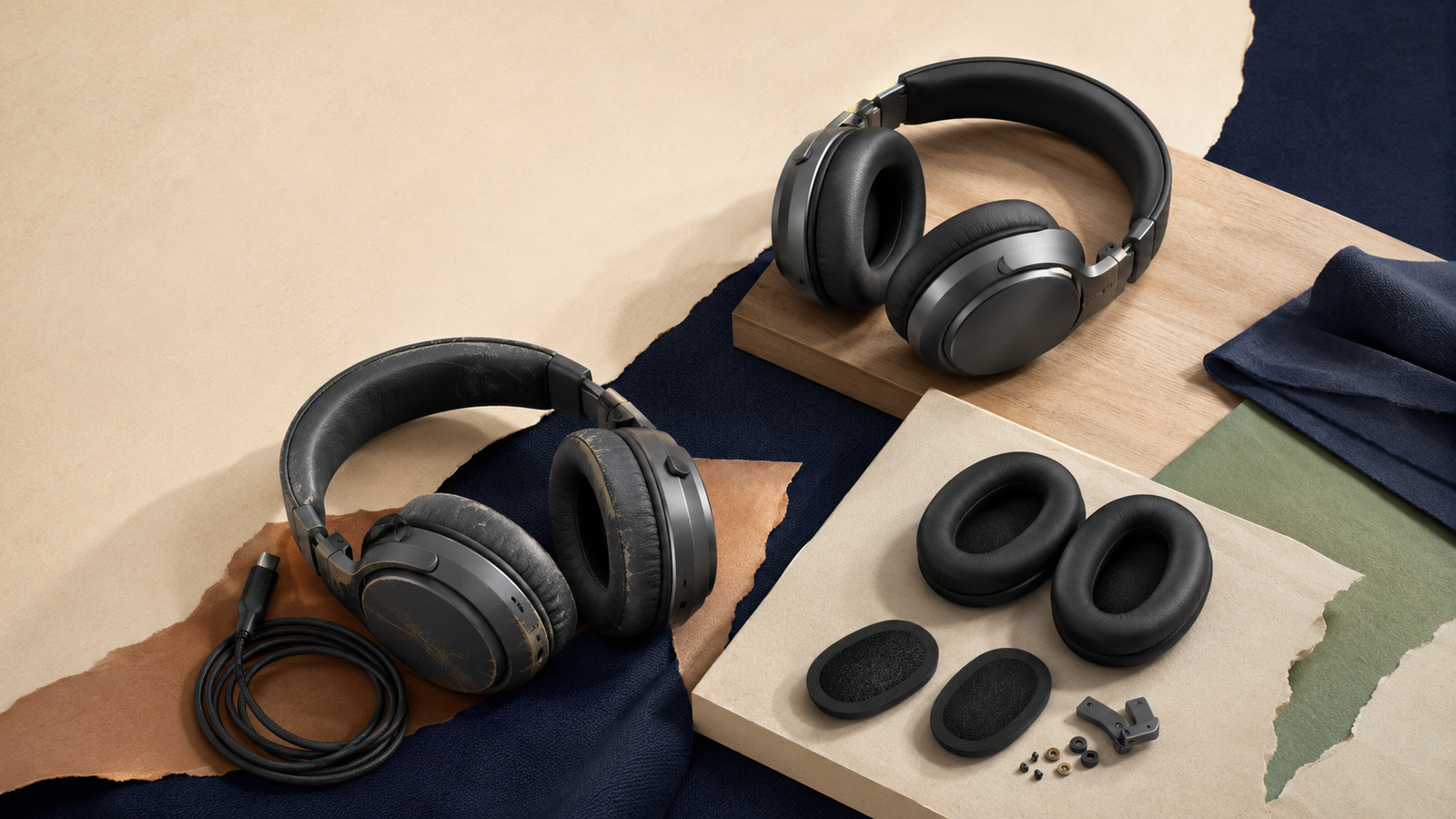
Two listings can look almost identical at first glance. One product is described as refurbished, while the other is simply used. Both have had a previous life, both cost less than buying new, and sometimes both even look equally clean in the photos.
The important difference is not just appearance. It is what happened to the product before it was offered for sale again. Who inspected it? Was anything repaired? Was the battery checked? Is there a warranty? Can you return it if something goes wrong?
Those questions matter more than the label alone. A well-documented used product can be a better purchase than a poorly refurbished one, while a properly tested refurbished device can reduce much of the uncertainty that comes with buying second-hand.
A refurbished product has usually been inspected, repaired, tested or restored before resale. A used product may simply be resold in its existing condition. However, neither label guarantees quality. Compare the seller, testing process, condition, warranty and return terms before deciding.
What is the difference between refurbished and used?
The simplest way to think about the refurbished vs used difference is that refurbished describes something that has supposedly been done to the product, while used mainly describes its history.
Refurbished is primarily a process claim. Used is primarily a history or condition description.
| Factor | Refurbished | Used |
|---|---|---|
| Product history | May have been used, returned, displayed or repaired | Usually previously owned or operated |
| Testing | Often includes some functional inspection or testing | May have no formal testing |
| Repairs | Parts may have been repaired or replaced | May be sold exactly as the previous owner used it |
| Condition | Often sold using a stated condition grade | Condition may depend mainly on the seller’s description |
| Warranty | May include seller, manufacturer or refurbisher coverage | Often limited or absent, especially in private sales |
| Returns | Commercial sellers commonly publish return terms | Can be much more limited in private transactions |
| Price | Usually below new | Often cheaper than both new and refurbished |
| Main uncertainty | How thorough the refurbishment actually was | The product’s condition, history and remaining life |
This is why the word refurbished should lead to another question: refurbished how? If a seller cannot explain what was inspected, tested or repaired, the label provides much less useful information than it first appears to.
If you want the broader definition first, see What Does Refurbished Mean?.
What should refurbished actually mean?
There is no single refurbishment process used by every manufacturer, retailer and independent refurbisher. One seller might run diagnostic tests, replace worn parts and retest the device. Another might perform a much lighter inspection before listing it for resale.
Instead of relying on the word itself, look for answers to questions such as:
- Who carried out the refurbishment?
- Was the complete product functionally tested?
- Were defective or worn components replaced?
- Was the battery tested, graded or replaced?
- Was previous user data securely removed?
- Is there a clearly defined cosmetic condition grade?
- Are original or compatible accessories included?
- Was the product tested again after any repairs?
- Who is responsible for the warranty?
Do not rely on marketing language alone
Terms such as “certified,” “excellent,” “premium” and “like new” do not necessarily describe the same process from one seller to another. Read the seller’s actual grading and refurbishment policy.
In New Zealand, Consumer Protection states that businesses must accurately describe whether goods are “as new”, second-hand or reconditioned and must not make product claims they cannot substantiate. That makes the seller’s specific description more meaningful than an attractive label on its own.
Source: New Zealand Consumer Protection — Misleading prices or advertising
What does a used product usually mean?
“Used” covers a much wider range of products. It could be a phone owned for three years by one person, an ex-business laptop, a trade-in, an appliance from a second-hand dealer or an item sold privately through an online marketplace.
Some used products are thoroughly checked before sale. Others are simply photographed, described and sold in their current condition. That does not automatically make them poor purchases.
A used product can offer excellent value when it is simple to inspect, the seller can explain its history and the price compensates for the additional uncertainty. Durable furniture, basic tools and uncomplicated equipment, for example, may be easier for a buyer to evaluate than a modern smartphone with a sealed battery and complex electronics.
Used products may also give you something a generic refurbishment grade cannot: a real usage history. A careful private owner who can explain when an item was bought, how it was used and why it is being sold may give you useful evidence even without a formal refurbishment process.
Is refurbished always better than used?
No. Refurbished often reduces uncertainty, but only when the refurbishment process and seller are credible.
Refurbished may be better when
- You are buying a phone, laptop, tablet or another technically complex product.
- Internal components or battery health are difficult to inspect yourself.
- The seller explains its testing and grading process clearly.
- You receive useful warranty coverage and clearly stated return terms.
- The refurbished price is still meaningfully below the equivalent new product.
- You are purchasing remotely and cannot examine the individual item first.
Used may be better when
- The product is relatively simple and faults are easy to identify.
- You can inspect and test the exact item before paying.
- The seller can provide a believable usage and maintenance history.
- The price saving is large enough to justify taking more risk.
- You are comfortable without a long seller warranty.
- A failure would be inexpensive and easy to deal with.
A better question
Instead of asking whether refurbished is automatically better than used, ask: Which option gives me enough evidence for the risk I am taking?
When should you avoid both options?
Sometimes neither the refurbished listing nor the ordinary used listing provides enough information to justify the saving.
Warning signs worth taking seriously
- The seller relies on vague descriptions such as “like new” without defining them.
- There are no photos of the actual product.
- Battery condition is important but not disclosed.
- The seller will not explain which parts were repaired or replaced.
- There is no useful warranty and no practical return route.
- The asking price is close to new despite the product being significantly older.
- The serial number, activation status, account lock or product origin is unclear.
- Software or security support is approaching its end.
- A private seller calls an item refurbished but cannot explain the refurbishment.
- An item is sold “as-is” or “final sale” without its known faults being clearly described.
A cheap purchase is only useful if the saving remains after repairs, missing accessories and early replacement are considered.
How do warranty and returns differ?
Warranty and return policy are related, but they solve different problems.
A warranty is a promise about what happens if a covered problem occurs, potentially including repair, replacement or another remedy. A return policy generally tells you whether and under what circumstances you can send the product back after purchase.
A product can have warranty coverage but no change-of-mind return. Another seller might offer a short return window without providing meaningful long-term warranty coverage.
Before buying, understand both. Start with What Is a Product Warranty? and then use How to Read a Product Warranty to examine the actual terms.
In Australia, the ACCC explains that consumer guarantees apply automatically under Australian Consumer Law, while warranties are additional promises. A business warranty does not replace those underlying consumer rights.
Source: Australian Competition and Consumer Commission — Consumer rights and guarantees
Does the seller matter more than the label?
Often, yes. “Refurbished” tells you very little unless you also know who stands behind that description.
| Seller | Typical advantage | Main concern |
|---|---|---|
| Manufacturer | Testing, replacement parts and procedures may be clearly defined | Often costs more than other refurbished options |
| Authorised retailer | Returns and support may be easier to manage | You still need to confirm who actually refurbished the item |
| Specialist refurbisher | May provide detailed grading and testing information | Quality varies, so reputation and processes need checking |
| Second-hand dealer | Can offer competitive prices and a broad selection | Original product history may be incomplete |
| Private seller | Potentially the lowest price and direct usage history | Returns, warranty and legal protections can be more limited |
In New Zealand, your rights can differ depending on whether you are buying from a trader or a private individual. Consumer Protection specifically distinguishes private sales from purchases made from businesses selling second-hand goods.
Source: New Zealand Consumer Protection — Private sales and second-hand goods
How to compare a refurbished listing with a used listing
Compare the actual offers rather than comparing the words “refurbished” and “used” in isolation.
Make sure both listings are genuinely comparable. Small model-year, storage, processor or specification differences can explain a large part of the price gap.
For refurbished products, find out what the process included. For used products, determine whether the seller performed any testing before listing.
A product can pass a basic functional test while still having a heavily worn battery or another component close to replacement.
Do not assume Grade A, Excellent or Like New has a universal meaning. Find the seller’s own definition.
Missing chargers, cables, adapters, cases or proprietary parts can quickly reduce the apparent saving.
Look at the duration, exclusions, who pays return shipping and what remedy is actually offered if the product fails.
Include likely repairs, replacement batteries, missing accessories and the possibility of replacing the product sooner.
For a more detailed buying process, use How to Buy Refurbished Products Safely. You can also use How to Compare Products Online and How to Compare Product Specifications when two listings are not configured exactly the same.
If repairs and replacement timing could materially change the calculation, look at What Is Total Cost of Ownership? rather than comparing purchase prices alone.
Which option is right for you?
| Your situation | Better starting point |
|---|---|
| You want the lowest possible price and can accept more uncertainty | Used |
| You want to save money while reducing some second-hand risk | Refurbished |
| You want maximum certainty and manufacturer support | New |
| You can inspect and test the exact product in person | Used may work well |
| You cannot inspect the product before buying | Refurbished from a reliable seller |
| The device stores personal data | Trusted refurbisher with data-wipe procedures |
| You depend on the product for work | Strong-warranty refurbished or new |
| The price difference from new is very small | New may make more sense |
The choice therefore depends on how much uncertainty you are accepting in exchange for the saving. Refurbished commonly gives you more information and support. Used commonly gives you a lower price. Neither is automatically the better deal.
Refurbished usually means more testing and support. Used usually means more uncertainty and a lower price. But the seller, evidence and terms matter more than the label alone.
Frequently asked questions
Is refurbished better than used?
Not automatically. A properly tested refurbished product with a useful warranty may carry less risk, but a well-maintained used product with a clear history can still be the better value.
Is refurbished the same as reconditioned?
The terms are often used similarly, but sellers may define their processes differently. Check what inspection, repair and testing were actually performed.
Does used mean the product has not been tested?
No. Some used products are tested by dealers or sellers. “Used” only tells you that the product has had previous use; it does not tell you how thoroughly it was inspected before resale.
Do refurbished products have warranties?
Many do, but not all. Coverage can come from a manufacturer, retailer or independent refurbisher, so check who provides it, how long it lasts and what it covers.
Can a used product still be good value?
Yes. Used products can be excellent value when their condition is easy to verify, the price reflects their age and the risk of failure is manageable.
How much cheaper should refurbished products be?
There is no universal percentage. Compare the saving with the product’s age, condition, warranty, remaining support life and the current price of an equivalent new model.
Should I buy a used phone or refurbished phone?
A refurbished phone from a reputable seller can be easier to evaluate because battery, functionality, account status and warranty may be documented. A used phone can still be a good deal if you can test it properly and verify its history.
Can I return a refurbished product?
It depends on the seller, applicable consumer law and the reason for the return. Read the seller’s return terms before purchasing rather than assuming all refurbished products can be returned.
Is “like new” the same as refurbished?
No. “Like new” usually describes perceived condition, while refurbished should tell you something about inspection, repair or restoration. Always check how the seller defines both terms.
Do private sellers have to provide a warranty?
Rules vary by country and transaction type. Private sales often have different protections from purchases made from a business, so check the rules that apply where you live before assuming commercial warranty or return rights apply.