
A practical way to decide whether a product is right for you without opening dozens of tabs, trusting one review, or paying for features you will never use.
Last reviewed: August 21, 2026. This is an evergreen buying guide; product prices, policies and specifications can change.
To research a product before buying, first define what you need it to do, then shortlist a few suitable options. Check the specifications that affect your use, read independent reviews for real-world performance, and compare the full cost of ownership, warranty and return policy. Stop when one product clearly fits your needs and the remaining differences are unlikely to change your decision.
Start with
Your actual use case, budget, space limits and three or four must-have requirements.
Compare
A shortlist of three to five products rather than every option on the market.
Check carefully
Important specifications, independent review patterns, warranty, returns and ownership costs.
Stop when
One option meets your essential requirements and the remaining trade-offs are understood.

Who this guide is for
This guide is for anyone who wants to make a more confident purchase of a product such as a laptop, phone, appliance, camera, tool, fitness device or piece of home equipment. It is especially useful when several products look similar, the price difference is significant, or the product will be expensive or inconvenient to replace.
It is not a list of products to buy. The better question is not “Which product has the highest rating?” It is “Which product is most likely to work well for the way I will actually use it?”
1. Define the decision before you search
Product research becomes difficult when you start with a broad search such as “best laptop” or “best air fryer”. Those searches mix together different budgets, priorities and use cases. Before looking at products, write down the decision you are trying to make.
Answer these questions in plain language:
- What job must the product do?
- How often will I use it?
- Where will I use it, and are there space, power or compatibility limits?
- Which features are essential?
- Which inconveniences would make me regret the purchase?
- What is the maximum amount I am comfortable spending?
Separate your requirements into three groups: must-have, nice-to-have and irrelevant. This prevents an impressive extra feature from distracting you from a basic problem, such as poor size, weak battery life, difficult maintenance or an unsuitable connection.
2. Set a realistic budget, not just a sticker price
The advertised price is only the starting point. Depending on the product, you may also pay for accessories, delivery, installation, subscriptions, replacement parts, filters, batteries, software, electricity or repairs.
Decide whether your budget is a hard limit or a target range. A slightly more expensive product can be the better choice if it lasts longer or avoids a necessary add-on. On the other hand, a premium model is not automatically better value if you will not use its additional features.
For a more detailed method, see What Is Total Cost of Ownership? and How to Calculate the Real Cost of Owning a Product.
3. Build a shortlist of three to five products
You do not need to compare every product on the market. A shortlist of three to five realistic options is usually enough to see the meaningful differences without creating decision fatigue.
Start with products that meet your must-have requirements. Remove any option that fails a deal-breaker, even if it has excellent reviews. There is no point comparing a product that is too large, incompatible with your existing setup or outside your budget.
When building the shortlist, use more than one type of source. A manufacturer’s website can help you find the official range. A specialist retailer can show current prices and availability. Independent reviews can reveal how the product performs outside controlled marketing claims.
Once you have a shortlist, use How to Compare Products Online to keep the comparison focused on the options that actually fit your needs.

4. Compare the specifications that affect your use
Specifications are useful, but only when you understand what they change in practice. A larger number is not always a better result. More power may mean more noise, a heavier design or higher energy use. More storage may be unnecessary if you mostly stream or use cloud storage.
For every important specification, ask two questions:
- What does this specification measure?
- How will the difference affect my actual use?
Focus on the specifications connected to your must-have requirements. Depending on the category, these might include size, capacity, battery life, power, compatibility, materials, connectivity, noise, water resistance or supported formats.
If you are unsure which numbers matter, read How to Compare Product Specifications and How to Compare Specifications That Actually Matter.
5. Check the official product information
Before relying on a review or retailer summary, check the manufacturer’s product page and, when available, the user manual. This is where you are most likely to find the exact dimensions, compatibility limits, included accessories, operating requirements and warranty terms.
Look for details that are easy to miss in a headline:
- Does the advertised performance depend on a particular mode or accessory?
- Is the stated capacity measured under conditions that may not match your use?
- Are important accessories sold separately?
- Does the product need a subscription, app, account or particular operating system?
- Are there installation, maintenance or storage requirements?
Marketing language often describes the best possible result. The manual and technical specifications help you understand the conditions behind that result.
6. Read reviews for patterns, not isolated opinions
Reviews are most useful when they add evidence that a product page cannot provide: how easy the product is to use, whether it performs consistently, what becomes annoying after repeated use, and how well it holds up over time.
Do not make a decision from one enthusiastic review or one angry complaint. Instead, look for repeated observations across several independent sources. A single negative comment may describe a faulty unit or a very specific use case. The same complaint appearing across many reviews deserves more attention.
Also check how the review was produced. Does it explain the testing method? Does it mention limitations? Does it separate the reviewer’s opinion from measurable results? Is the review clearly sponsored or based only on a short first impression?
For a deeper checklist, see How to Tell Whether an Online Review Is Trustworthy.
7. Investigate the ownership experience
A product can look excellent at checkout and become frustrating later. Research the parts of ownership that are easy to ignore while you are focused on the initial price.
- Maintenance: How often does it need cleaning, calibration, updates or replacement consumables?
- Durability: Are there repeated reports of a particular component failing?
- Repair: Can the product be repaired, and are parts or service available?
- Compatibility: Will it continue to work with your other devices or software?
- Energy use: Could regular use materially affect your power bill?
- Support: Is there a clear way to get help if something goes wrong?
For products that remain connected to power, it can also help to understand what energy efficiency actually means and what standby power is.
8. Read the warranty and return policy before buying
A warranty is not the same as a promise that every problem will be easy to fix. Check who provides the warranty, how long it lasts, what it covers, and what the customer must do to make a claim.
Pay attention to exclusions, proof-of-purchase requirements, shipping responsibilities and whether the seller or manufacturer handles the claim. Also check the retailer’s return policy separately. A return policy may cover a change of mind, while a warranty usually deals with a fault or failure under defined conditions.
These details matter most when the product is expensive, difficult to transport or likely to need support. Our guide on How to Read a Product Warranty explains what to look for.
9. Check for category-specific risks
Every product category has problems that a general star rating may hide. Before buying, search for the product name together with specific terms such as “common problems”, “long-term review”, “replacement parts”, “compatibility”, “noise”, “leak”, “overheating” or “return”. Use terms that match the way you plan to use the product.
Consider the environment as well. For outdoor or water-exposed equipment, an IP rating may be important, but the rating only makes sense when you know what its two numbers represent. See What Is an IP Rating? before treating it as a simple quality score.
If you are considering refurbished stock, research the seller’s grading system, testing process, included warranty and return terms. A lower price is not enough by itself. Read How to Buy Refurbished Products Safely for a separate checklist.
10. Put the evidence into a simple comparison table
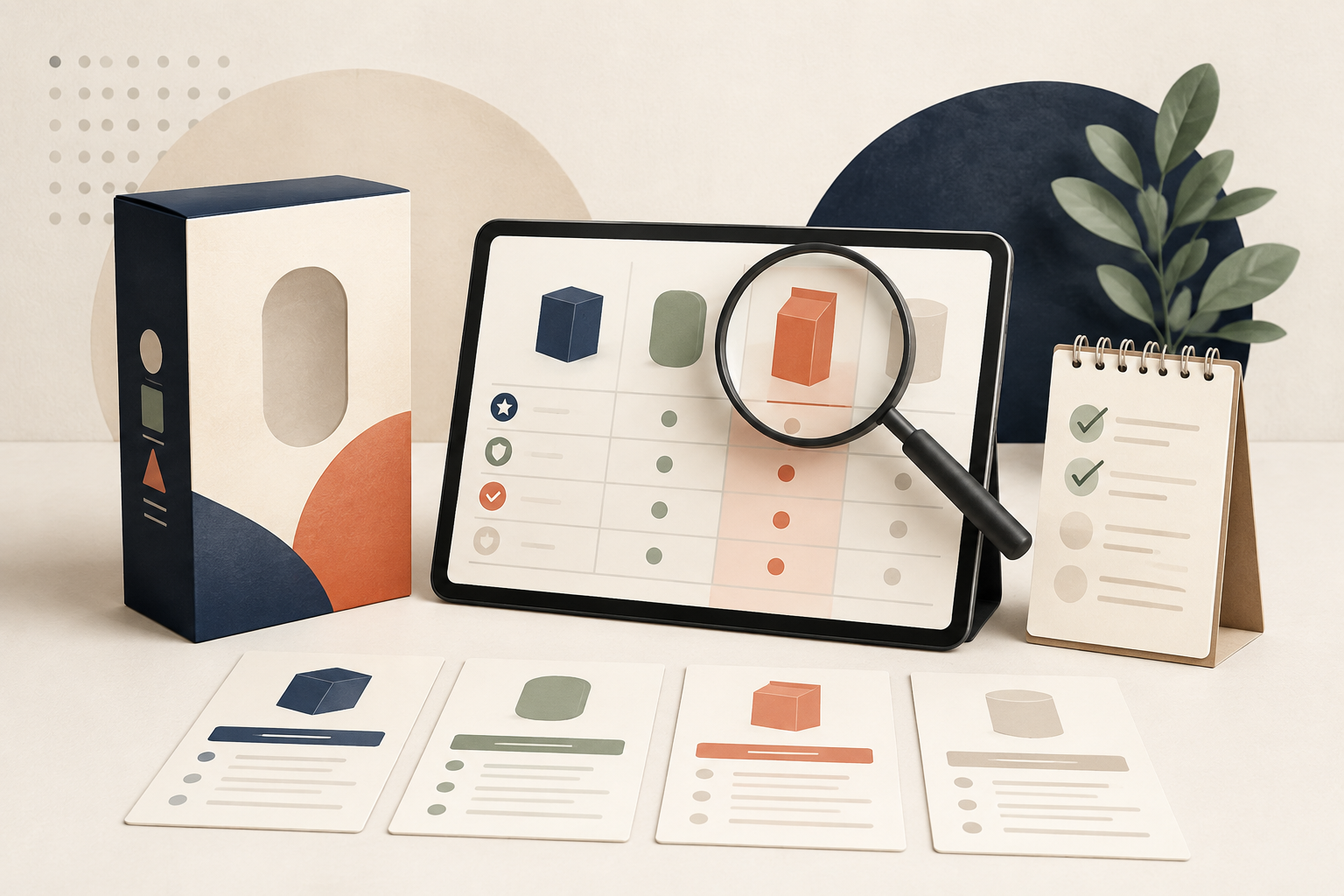
Once you have gathered the information, stop browsing and write it down. A comparison table makes trade-offs visible and reduces the influence of whichever product you looked at most recently.
| Question | Product A | Product B | Product C |
|---|---|---|---|
| Meets my must-haves? | Yes / No | Yes / No | Yes / No |
| Important specification | Note the result | Note the result | Note the result |
| Total expected cost | Price + extras | Price + extras | Price + extras |
| Main concern | Write one concern | Write one concern | Write one concern |
| Why it fits my use | One-sentence reason | One-sentence reason | One-sentence reason |
Keep the notes short. If you need a paragraph to explain why a product is suitable, you may still be missing a clear decision criterion. When the table is complete, compare the products fairly rather than letting one impressive feature dominate the result. How to Compare Two Products Fairly can help with that final step.
Common mistakes to avoid
Better research habits
- Start with a specific use case and a short list.
- Compare official, independent and owner evidence.
- Check the full ownership cost before deciding.
- Look for repeated patterns rather than isolated comments.
Habits that create bad decisions
- Copying the ranking from a generic “best” list.
- Comparing numbers without understanding their effect.
- Trusting star ratings or one review alone.
- Researching forever after the key trade-offs are clear.
- Ignoring the cheapest option until the end: A basic model may be enough if it meets every must-have.
- Buying the premium model “just in case”: Extra features have value only when you will use them.
- Forgetting the seller: Price, delivery, support, returns and warranty handling can differ between retailers.
A practical 15-minute product research process
When you do not need an exhaustive investigation, use this shorter version:
- Minutes 1–2: Write your use case, budget and three must-have requirements.
- Minutes 3–5: Find three products that meet those requirements.
- Minutes 6–9: Compare the few specifications that affect your use.
- Minutes 10–12: Look for repeated review complaints and long-term ownership issues.
- Minutes 13–15: Check the total cost, warranty, return policy and seller support.
This process is designed to catch the expensive or frustrating problems that a product page is least likely to highlight.
When should you stop researching?
Stop when you have enough evidence to answer four questions:
- Does the product meet every essential requirement?
- Do I understand the most important trade-offs?
- Can I afford the full cost of owning it?
- What will I do if it arrives faulty or does not suit my use?
If two products are still close after a reasonable comparison, choose the one with the better fit, clearer support or lower downside. You do not need to prove that it is the objectively best product for everyone. You only need enough evidence that it is a sensible choice for you.
The bottom line
Good product research is a decision process, not a race to collect the most information. Define your needs first, create a short list, check the specifications that matter, look for patterns in independent reviews, and include the costs and risks of ownership. Then make the decision before research turns into hesitation.
A product is a good buy when it fits your real use, budget and tolerance for inconvenience. It does not have to win every category on paper.

Choose the product that meets your essential requirements with the fewest serious downsides. You do not need the product with the longest specification sheet or the highest average rating.
Frequently asked questions
How many products should I compare before buying?
Three to five realistic options are usually enough. Start by removing products that fail a must-have requirement, then compare the remaining options using the same criteria.
Should I trust product review ratings?
Ratings are useful as a starting signal, but not as a final decision. Read the review content, check whether the reviewer explains the testing method and look for repeated patterns across independent sources.
What should I check besides the product price?
Check required accessories, delivery, installation, subscriptions, consumables, energy use, maintenance, repair costs, warranty and the retailer’s return policy.
Are product specifications enough to choose between two products?
No. Specifications describe measurable features, but they may not show usability, noise, durability, customer support or how the product behaves in your real environment.
When should I stop researching?
Stop when one option meets your essential requirements, you understand the important trade-offs, you can afford the full ownership cost and you know what support is available if something goes wrong.