
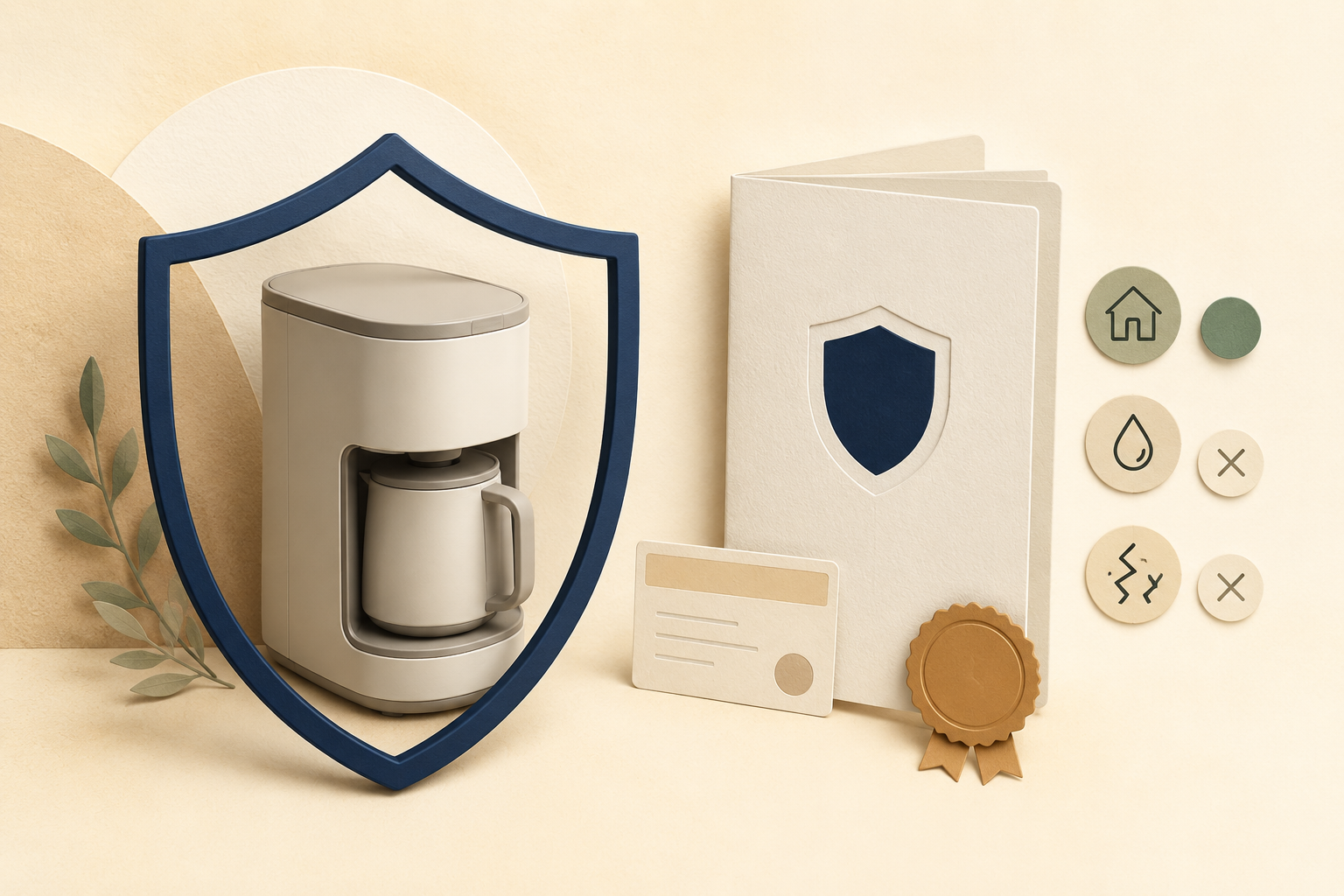
A product warranty can reduce the risk of buying something that later develops a fault. But a warranty is not automatically a promise to fix every problem. It is a specific promise with a defined period, coverage, exclusions and claims process.
Last reviewed: August 22, 2026. Warranty terms and consumer laws vary by product, seller and country, so check the current documents and local rules before making a claim.
A product warranty is a promise about a product’s quality, performance or repair support. It usually explains how long the promise lasts, which problems are covered, what the provider will do and which situations are excluded. A warranty can add useful protection, but it does not replace local consumer rights or cover every type of damage.
A specific promise
The manufacturer, seller or warranty provider promises to do something if a covered problem occurs.
Defined coverage
The document should explain the covered faults, parts, products, time period and conditions.
A remedy
The provider may promise a repair, replacement, refund, service or another stated solution.
Not automatic insurance
Accidental damage, misuse, normal wear and other exclusions may fall outside the warranty.
What does a product warranty mean?
A product warranty is a promise made by a manufacturer, seller or other provider about what will happen if a product has a covered problem. The promise may relate to the product’s quality, performance, materials, workmanship, repair support or replacement.
For example, a manufacturer may promise to repair a faulty laptop for two years. A seller may promise to replace a defective kitchen appliance. A business may also make a specific promise about what a product can do or how long a particular part will last.
The U.S. Federal Trade Commission describes a warranty as a manufacturer’s or seller’s promise to stand behind a product. The exact promise is more important than the word itself, so read the written terms before assuming that a problem is covered.

Who provides a product warranty?
The person or company responsible for a warranty affects where you make a claim and what support you can expect.
| Provider | What it may promise | What to check |
|---|---|---|
| Manufacturer | Repair or replace a product with a covered fault. | Where repairs happen and who pays shipping. |
| Retailer | Provide store support, a replacement or a repair process. | Whether you contact the store or the manufacturer first. |
| Third-party provider | Provide paid or included repair support under a separate contract. | Provider reputation, fees, exclusions and claim limits. |
| Extended warranty seller | Offer additional coverage after or around the original purchase. | What new protection it adds beyond the original warranty and local consumer rights. |
Cross-border purchases and marketplace listings can make this less clear. Before buying, find out which company is responsible, where the product must be sent and whether the coverage is limited to a particular country or region.
What does a warranty usually cover?
Every warranty is different, but common coverage may include faults that arise from the product’s materials, manufacturing or ordinary intended use.
Manufacturing defects
A component or assembly does not meet the manufacturer’s standard when the product is made.
Faulty components
A covered part stops working even though the product was used in the way the instructions describe.
Product failure
The product no longer performs its main function during the stated coverage period.
Promised performance
A written or spoken promise about quality, capacity, durability or performance is not met.
A warranty may cover parts, labour, diagnostics, shipping or a replacement product, but do not assume that all of these are included. The remedy should be stated in the warranty terms or explained by the provider.
What does a warranty usually exclude?
Warranty exclusions are just as important as the headline coverage. Common exclusions may include:
- Accidental damage, drops or impacts;
- Liquid damage or exposure to unsuitable conditions;
- Misuse, neglect or use outside the instructions;
- Normal wear and tear;
- Consumable parts such as filters, ink, bulbs or batteries;
- Cosmetic damage that does not affect function;
- Unauthorised alterations, repairs or modifications;
- Damage caused by an incompatible accessory or another product;
- Lost, stolen or intentionally damaged products.
A warranty can also contain conditions about maintenance, registration, proof of purchase, authorised service or the way the product is used. That does not mean every condition will be legally effective everywhere, so local consumer law matters when there is a dispute.
What is the difference between a warranty and consumer guarantees?
A warranty and a consumer guarantee can both matter when a product develops a problem, but they come from different sources.
| Protection | Where it comes from | What it usually does |
|---|---|---|
| Product warranty | A promise from a manufacturer, seller or provider. | Sets out specific coverage, limits and remedies. |
| Consumer guarantee | Consumer law in the country or region where you buy. | Creates legal expectations about quality, safety, durability or fitness for purpose. |
| Return policy | A seller’s rules for returns. | May explain change-of-mind returns, exchanges and store credit. |
| Insurance | An insurance contract. | May cover risks such as accidental damage, loss or theft, depending on the policy. |
| Service contract | A separate paid agreement. | May cover specified repairs or maintenance for an additional price. |
In Australia, the ACCC explains that consumer guarantees apply automatically and warranties are additional promises. A warranty cannot replace or take away those basic consumer rights.[ACCC warranty guidance]
In New Zealand, the Consumer Guarantees Act provides minimum guarantees for products and services bought from businesses, including online purchases for personal or household use. The Act applies regardless of any store warranty or manufacturer’s warranty.[New Zealand Consumer Guarantees Act guidance]
How long does a product warranty last?
A warranty may last for a set number of months or years, or it may use another limit such as mileage, operating hours or the lifetime of a particular component.
Different parts of the same product can have different coverage periods. For example, the main device may have one period while its battery, accessories or replaceable parts have another.
A stated warranty period is not automatically the same as the product’s expected life. It tells you how long that particular promise applies under its terms. A product can fail within the warranty period and still fall outside the coverage if the problem is excluded. A product can also develop a fault after the written warranty ends while local consumer law may still provide protection.
Be careful with phrases such as:
- Lifetime warranty: find out whose lifetime or which product period the term describes.
- Limited warranty: check what is limited, such as parts, labour, region or remedy.
- Two-year warranty: check whether the period starts at purchase, delivery, registration or another date.
- Battery warranty: check whether capacity loss is treated differently from a battery failure.
How does a warranty claim work?
The exact process depends on the provider, but most claims begin with evidence and a clear description of the problem.
For a detailed method to read coverage, exclusions and claim conditions, continue with How to Read a Product Warranty. That guide focuses on interpreting the document before you buy or make a claim.

Are extended warranties worth buying?
An extended warranty or service contract is usually sold separately for an additional price. It may add coverage, but it may also repeat protection you already have from the original warranty or consumer law.
Before paying for one, compare:
- What the original warranty already covers;
- What consumer guarantees may already apply;
- Which new faults or repair periods are added;
- Whether there is a deductible, service fee or shipping cost;
- Which parts and labour are included;
- Who is responsible for the contract;
- How difficult it is to make a claim;
- Whether the product is likely to need an expensive repair.
The FTC’s guidance on extended warranties recommends checking whether the extra contract provides benefits beyond the original coverage. A longer period alone does not prove that the purchase is good value.
Does a longer warranty mean better product quality?
Not necessarily. A longer warranty can reduce the financial risk if something goes wrong, but it does not by itself prove that a product is more reliable, easier to repair or better made.
When comparing products, look at the warranty alongside:
- Independent reliability evidence;
- Availability of spare parts and repair facilities;
- Seller and manufacturer support;
- Return conditions;
- Expected maintenance and ownership costs;
- Whether the product fits your actual use.
A warranty is best understood as risk information. It tells you what support may be available under specific conditions, not how good the product is in every other respect.
If you are comparing the full cost of ownership, see What Is Total Cost of Ownership? A warranty may reduce the expected repair cost, but it does not remove all ownership costs or inconvenience.
Do refurbished products have warranties?
They can, but the warranty may come from the manufacturer, refurbisher, retailer or another provider. It may also be shorter or narrower than the warranty offered with a new product.
Before buying refurbished, check:
- Who provides the warranty;
- How long coverage lasts;
- Whether the battery is covered;
- Whether accessories are included;
- Where repairs are handled;
- Who pays shipping;
- Whether the warranty applies to the original buyer only.
For a wider checklist, read How to Buy Refurbished Products Safely.
The bottom line
A product warranty is a promise about what a manufacturer, seller or provider will do when a covered problem occurs. It may cover defects, repairs, replacement parts or specific performance promises, but it can also contain important exclusions and conditions.
Before buying, check the provider, coverage period, exclusions, remedy, claim process and any costs you may still have to pay. Also check the consumer protections that apply where you live. A warranty can reduce risk, but it does not replace careful product research or local consumer rights.
A warranty is not a promise that nothing will go wrong. It is a promise about what happens when a covered problem does.
Frequently asked questions
What is a product warranty in simple terms?
A product warranty is a promise about a product’s quality, performance or repair support. It explains what the provider will do if a covered problem occurs.
Is a warranty the same as a guarantee?
The terms can be used differently in different countries. In consumer law, a warranty is often a specific promise from a business or manufacturer, while a consumer guarantee is a legal protection that may apply automatically.
What does a product warranty usually cover?
It may cover manufacturing defects, faulty components, workmanship problems or product failure during the stated period. The exact coverage depends on the written terms.
Does a warranty cover accidental damage?
Usually not unless the warranty or a separate protection plan specifically includes it. Drops, liquid damage, misuse and other accidents are common exclusions.
How long does a product warranty last?
It may last for a stated number of months or years, or use limits such as mileage or operating hours. Parts and batteries may have different periods from the main product.
Does a warranty cover normal wear and tear?
Usually not. Consumables, batteries, filters, cosmetic changes and parts that naturally wear out may have separate terms or may be excluded.
Do I need a receipt to make a warranty claim?
Many providers ask for proof of purchase or another way to confirm the purchase date. Keep the receipt, invoice, order email and serial number when possible.
Is an extended warranty worth buying?
It depends on the added coverage, price, repair risk, exclusions and consumer protections that already apply. Compare the contract with the original warranty before paying extra.
Can consumer rights last longer than a written warranty?
In some countries, consumer guarantees can apply beyond the stated warranty period. The answer depends on local law, the product, the fault and how the product was bought.
Does a refurbished product have a warranty?
It may have coverage from the manufacturer, refurbisher or seller. Check the provider, duration, battery terms, claim location and return conditions before buying.
Who should I contact about a warranty problem?
Check the warranty terms first. They may direct you to the seller, manufacturer or an authorised service provider. If local consumer law applies, the seller may also have responsibilities.