
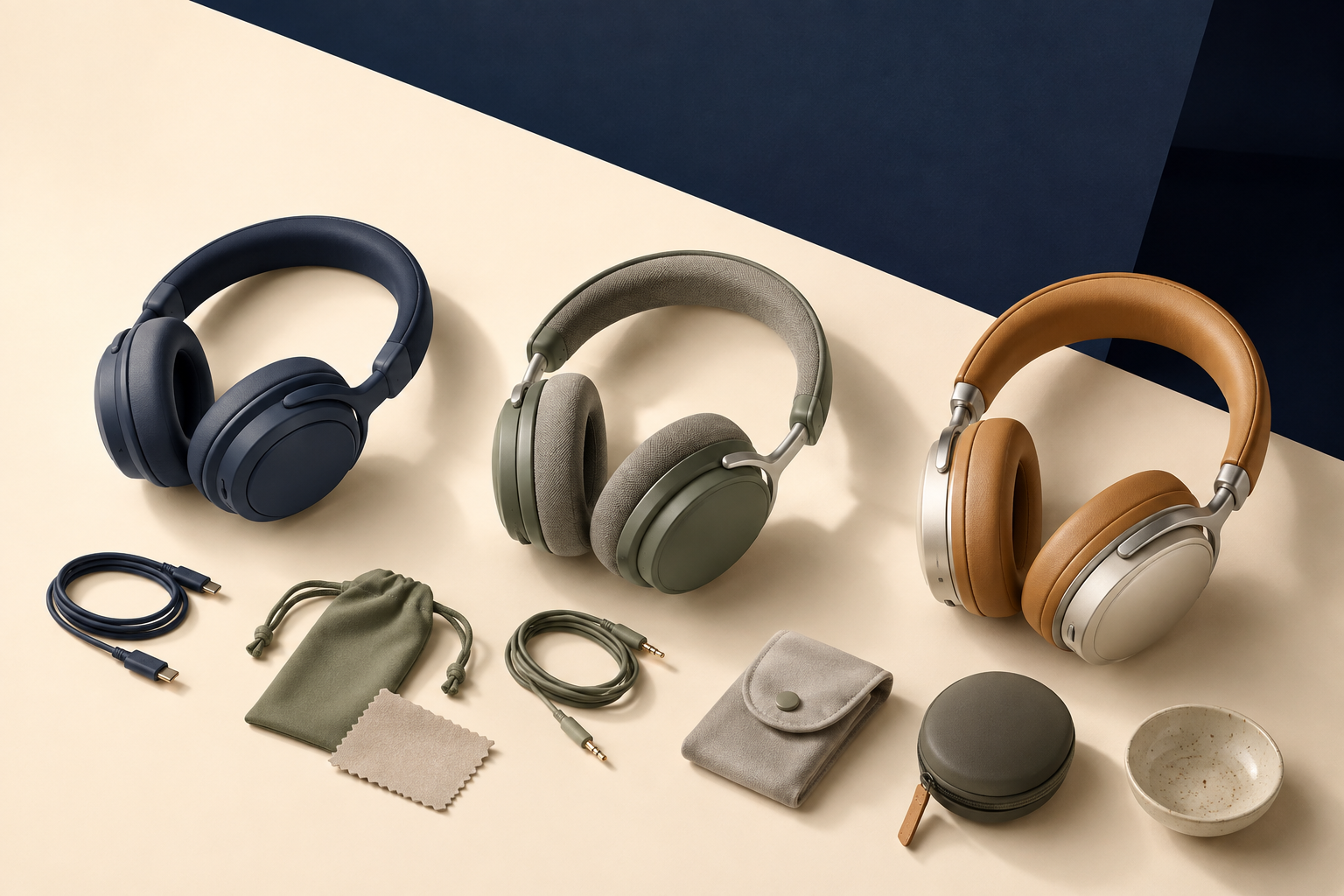
Budget, mid-range and premium are price positions, not guarantees of quality. The right tier is the least expensive option that reliably covers your real needs without creating avoidable replacement, compatibility or ownership costs.
Last reviewed: August 27, 2026. Prices, model ranges and included services change frequently, so compare current products rather than assuming a familiar brand always belongs in the same tier.
Choose budget when the job is simple, use is occasional and failure would be a minor inconvenience. Start with mid-range for frequently used products because it often adds the durability, comfort and support that matter most. Pay for premium only when you can name the extra benefit, expect to use it and believe it will improve performance, lifespan or ownership enough to justify the price.
Budget
Best for basic jobs, light use, short commitments and products that are easy to replace.
Mid-range
Often the practical starting point for regular use, better construction and fewer frustrating compromises.
Premium
Worth considering when a specific improvement will be noticed often or reduce a meaningful risk or cost.
The real goal
Buy the capability you need, not the tier name a retailer wants you to choose.
Price tiers are useful because they narrow a crowded market, but they can also create false shortcuts. A premium label may describe better materials, specialist performance or stronger support. It may also reflect styling, exclusivity or a brand’s pricing strategy. A budget product can be perfectly adequate for a narrow task, while a cheap-looking deal can become expensive if it fails early or requires proprietary extras.
Before sorting products into tiers, use a structured product-research process to define the task, confirm the exact models and collect evidence from specifications, warranties and real-world use. The objective is not to prove that expensive products are better. It is to find the lowest sensible level of spending for your situation.
What do budget, mid-range and premium really mean?
There is no universal price boundary between these groups. A mid-range kettle and a mid-range laptop have completely different prices, and one retailer’s “premium” model may be another brand’s ordinary model. Treat each tier as a position within a comparable product category at a particular time.
| Tier | Typical promise | Common compromise | Best fit |
|---|---|---|---|
| Budget | Core function at a low upfront price | Fewer features, simpler materials, shorter support or less refinement | Simple tasks, light use and low consequences if the product disappoints |
| Mid-range | A balance of performance, durability and everyday convenience | May omit specialist features or luxury finishes | Regular use where comfort, reliability and service matter |
| Premium | Higher performance, materials, precision, support or design | Smaller improvements can cost disproportionately more | Heavy use, specialist needs or situations where failure is costly |
Do not compare tiers by price alone. First check whether the models are genuinely comparable in size, capacity, generation and included accessories. Our guide to comparing two products fairly explains how a mismatched comparison can make one option appear better than it is.
Start with the job, not the price
Write down what the product must do before you look at a retailer’s range. Separate non-negotiable requirements from preferences. For a laptop, the non-negotiables might be software compatibility, memory capacity and battery life for a normal day. A thinner body, a brighter finish or an extra camera mode may be preferences rather than reasons to move up a tier.
Frequency
Something used for hours every day deserves more scrutiny than an item used twice a year.
Consequence of failure
A failed party speaker is inconvenient; a failed work drive or safety product may be far more costly.
Performance threshold
Identify the level at which the product does the job well enough. More capability after that point may add little value.
Ownership horizon
A temporary need and a five-year purchase should not use the same decision rule.
Translate each requirement into a specification or test you can verify. The guide to comparing specifications that actually matter helps separate useful measures from impressive-looking numbers.

When a budget product makes sense
A budget option can be the rational choice when the core task is uncomplicated and the extra features in higher tiers would sit unused. Basic cables, occasional-use tools, guest-room accessories and simple storage products can fall into this category, provided the item meets relevant safety and compatibility requirements.
- You need one clear function and the budget model performs it adequately.
- Use will be light or temporary.
- The product is easy to inspect, return or replace.
- Failure would not damage another item, interrupt work or create a safety problem.
- The higher tiers mostly add appearance, bundled extras or features you will not use.
Avoid budget products when the low price depends on a hidden compromise you cannot accept: poor repairability, weak software support, a hard-to-replace battery, missing accessories or consumables that cost more later. The comparison in Cheap vs Expensive Products shows why the sticker price is only one part of value.
Why mid-range is often the useful baseline
Mid-range products often remove the most noticeable weaknesses of entry-level models without charging for every specialist feature. That can mean a better hinge, a more comfortable handle, quieter operation, longer software support, replaceable parts or a clearer warranty. These are ordinary improvements, but repeated daily they can matter more than a headline specification.
Mid-range is not automatically the “safe” answer. Retailers know that many buyers want the middle option, so a range can be structured to make it look attractive. Check whether the move from budget to mid-range changes the features on your own list. If it only adds decorative finishes, a larger bundle or capacity you do not need, staying with budget may be smarter.
When premium is worth paying for
Premium makes sense when the extra money buys a benefit you can identify, use and verify. A professional tool that saves time every working day, a mattress that materially improves comfort, a camera lens needed for a specific job or an appliance with stronger repair support may justify a higher price. The case is strongest when improvement compounds through frequent use.
Premium can also be reasonable when consistency, precision, ergonomics or lower failure risk matters more than the cheapest possible purchase. It is weaker when the price increase mainly buys prestige, cosmetic materials or a feature that sounds impressive but does not change the outcome.
Pay more for
A measurable improvement, better fit, longer useful support, repairability or lower failure cost.
Be cautious of
Luxury finishes, duplicated features, proprietary accessories and vague claims such as “pro” or “ultimate”.
Ask for evidence
Independent tests, specific warranty terms, parts availability and reviews from people with a similar use case.
Protect the budget
A premium product is not good value if buying it creates debt or displaces a more important expense.
For a deeper test, read Are Premium Features Actually Worth Paying For? and assess each paid upgrade separately instead of accepting the whole premium bundle.
Compare the step up between tiers
Build a short comparison table using only the criteria that affect your decision. Then look at the incremental price: what do you gain by moving from budget to mid-range, and what additional gain comes from mid-range to premium?
| Question | Useful evidence | Warning sign |
|---|---|---|
| Does performance improve? | A relevant test, specification or repeatable result | A larger number that does not change your task |
| Will it last longer? | Construction, replaceable parts, support period and warranty details | Price or weight treated as proof of durability |
| Is it easier to own? | Cleaning, repairs, consumables, setup and compatibility | Convenience that depends on an expensive subscription |
| Will you notice the difference? | A trial, demonstration or reviews from comparable users | Benefits visible only in ideal tests or marketing images |
Read several kinds of evidence rather than relying on one enthusiastic reviewer. Use the checklist for judging whether an online review is trustworthy, especially when reviewers received premium products free or are comparing different generations.
Check the whole ownership cost
A higher upfront price can be economical when a product lasts longer, uses less energy, avoids paid add-ons or has a better resale value. It can also be wasteful if repairs are expensive, accessories are proprietary or a subscription is required to keep key features working.
Estimate the total cost of ownership: purchase price, essential accessories, energy, consumables, maintenance, subscriptions, likely repairs and disposal. Then consider cost per use when frequency is meaningful. A $300 item used 600 times costs $0.50 per use before other costs; a $100 alternative used only 50 times before replacement costs $2 per use.
This calculation is a planning tool, not a promise. Lifespan and use are uncertain, so test a conservative and an optimistic estimate. If premium only looks economical under perfect assumptions, the argument is weak.
A practical five-step decision
- Set the spending ceiling. Decide what is affordable before a premium model resets your expectations.
- List three to five must-haves. Exclude any product that fails them, whatever its tier.
- Choose one serious candidate per tier. Match size, generation and included items.
- Compare the incremental benefit. Write what each price jump buys in plain English.
- Check ownership and exit. Review warranty, repairs, return conditions, resale and recurring costs.
If no model clearly wins, stop and revisit the need. Waiting, borrowing or buying refurbished may be better than forcing a decision. Should You Buy Now or Wait for a Sale? can help when timing rather than product quality is the main uncertainty.
Frequently asked questions
Is mid-range always the best value?
No. It is a useful starting point for regularly used products, but value depends on your requirements. If the budget option already meets them, the middle model may add nothing useful. If a premium feature solves a real problem, paying more may be justified.
Does a higher price mean better quality?
Not reliably. Price can reflect materials, performance, support and quality control, but it can also reflect branding, design, distribution or scarcity. Verify the specific difference.
When should I avoid the cheapest option?
Avoid it when failure could create safety issues, damage other equipment, interrupt essential work or force an early replacement. Also check compatibility, support and consumable costs.
Should I buy premium if I plan to keep the product for years?
Longevity strengthens the case only if the premium model is likely to remain useful and supported. Repairability, replaceable batteries, software support and parts availability may matter more than the premium label.
Begin with needs and consequences, not with a preferred tier. Budget is sensible for simple, low-risk jobs; mid-range often suits regular use; premium is justified when a specific improvement will matter repeatedly. Compare the step up, include ownership costs and buy the lowest tier that clears your real requirements.
Before paying, make one final pass through How to Compare Products Online so the shortlist uses current prices, exact model numbers and the same evidence for every option.