

The sticker price is only the starting point. This practical method adds purchase, running, maintenance, repair, support and end-of-life costs, then adjusts for how long you expect to use the product.
Last reviewed: August 28, 2026. Costs and product lifespans vary, so treat the examples as a transparent way to test assumptions rather than as market quotes.
Calculate the real cost of owning a product by adding the upfront price, setup, running costs, consumables, maintenance, repairs, subscriptions and disposal, then subtracting a realistic resale or trade-in value. Divide the result by the number of years you expect to own it, or by realistic uses when that gives a more useful comparison.
Buy
Price, delivery, tax, installation and the accessories needed to use the product.
Use
Energy, fuel, data, subscriptions, consumables and other costs that recur as you use it.
Keep
Cleaning, maintenance, replacement parts, repairs, upgrades and support.
Exit
Disposal, recycling, moving and the realistic value you can recover at the end.
“How much does it cost?” usually means “What leaves my account today?” That answer matters, but it can hide the bigger decision. A printer that is cheap to buy may need costly ink. A heat pump with a higher purchase price may use less electricity. A device that looks like a bargain may need a proprietary charger, a paid service or an early replacement.
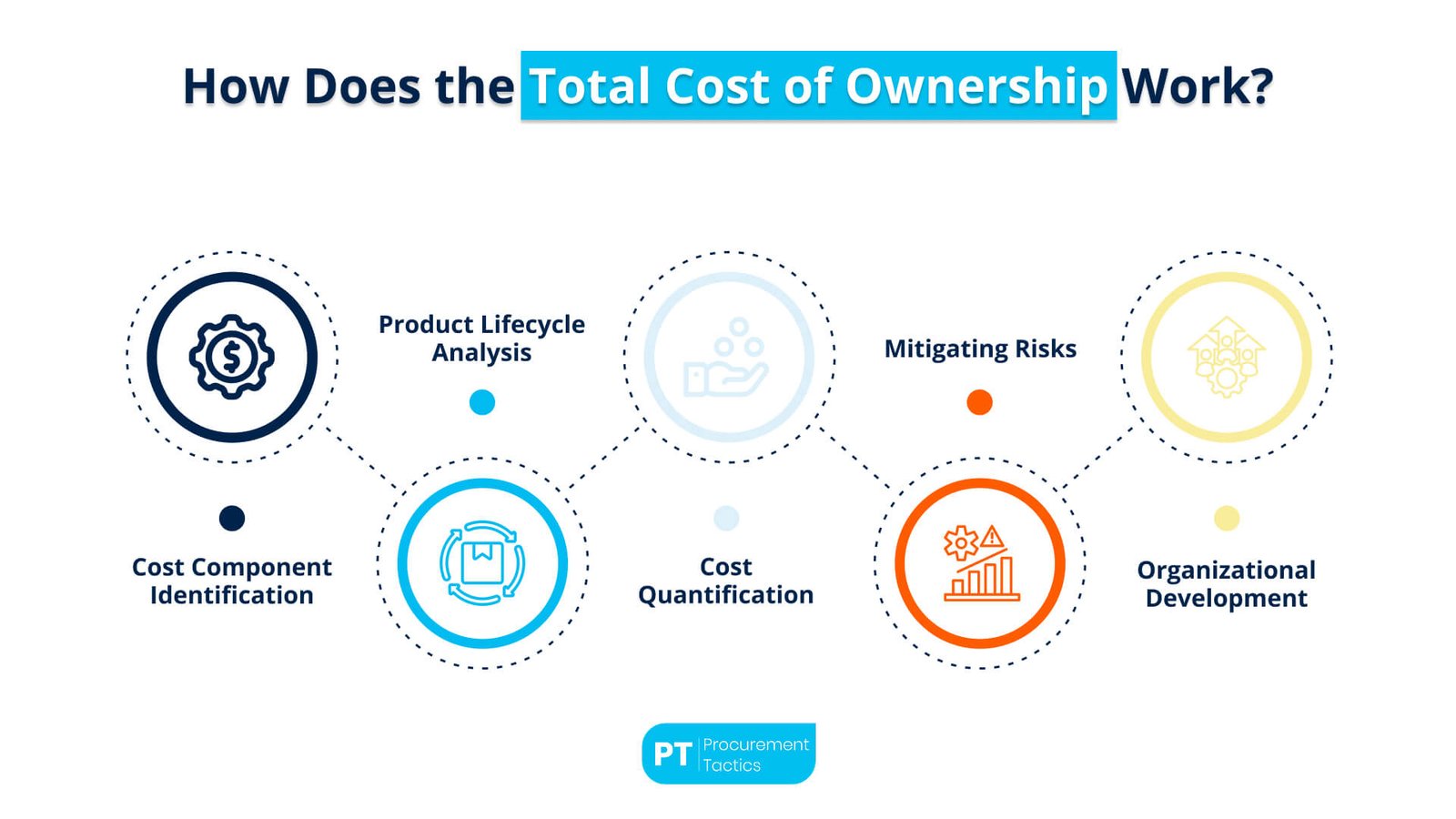
The broader idea is called total cost of ownership. You do not need an accountant’s spreadsheet to use it. A short list of relevant costs, a consistent time period and honest assumptions are enough to reveal whether the cheaper-looking option is actually cheaper for you. Start by defining the job and the likely ownership period with a structured product-research process.
Start with a useful formula
Use this consumer-friendly version as a checklist, not a promise about the future:
Then choose the measure that matches your decision:
| Measure | Calculation | Best question |
|---|---|---|
| Total ownership cost | Add all relevant costs and subtract resale value | What might this product cost over the period I expect to own it? |
| Annual ownership cost | Total ownership cost ÷ years owned | How much value or budget does it consume each year? |
| Cost per use | Total ownership cost ÷ realistic uses | Is it worthwhile for how often I will actually use it? |
Do not force every cost into every purchase. If delivery is identical for two products, it may not change the comparison. If one option needs a paid app or replacement battery, it deserves attention because it can change the ranking.
Count the upfront costs
Begin with the amount needed to make the product usable on day one. Record each item separately so a “free” installation or bundled accessory does not disappear from your assumptions.
| Cost | Questions to ask | Evidence |
|---|---|---|
| Purchase price | Is this the exact model, capacity and generation? | Current listing or quote |
| Delivery and tax | Are freight, rural delivery, duties or payment fees added later? | Checkout total |
| Setup | Do you need installation, calibration, training or a technician? | Supplier instructions and local rates |
| Essential extras | Will it work without a stand, hub, cable, filter or compatible software? | Included-items list and compatibility notes |
Compare like with like. A bare tool and a kit with the battery, charger and case are not the same purchase. Likewise, a phone with enough storage may be cheaper than a lower-priced model that needs cloud storage or an immediate upgrade.
Estimate running costs
Running costs are usually small enough to ignore at checkout and large enough to matter over years. For energy, multiply the product’s estimated kilowatt-hours by your electricity rate and expected use. An appliance label or manufacturer estimate is a starting point, not a guarantee: usage patterns, settings and local prices affect the result. Our guides to what energy efficiency actually means and standby electricity use can help you interpret those numbers.
Energy or fuel
Estimate normal hours, cycles or kilometres, then multiply by a current local rate. Use a range when the label assumes ideal conditions.
Consumables
Include ink, bags, filters, blades, detergent, batteries, paper or other items replaced during normal use.
Subscriptions
Check whether essential storage, security, navigation or smart features stop working without a recurring plan.
Connectivity
Some products need a data plan, compatible hub or paid service. Include only the portion caused by this purchase.
Allow for maintenance and repairs
Maintenance is not only a service appointment. It includes cleaning products, replacement filters, sharpening, software support, battery changes and the time or delivery cost involved in keeping the product usable. Check the written product warranty and find out what is excluded, who pays shipping and whether local repair support exists.
For repairs, use a probability rather than pretending you know the exact bill. For example, you might set aside $90 as a four-year expected repair allowance: a 30% chance of a $300 repair is an expected cost of $90. That is not a prediction that the repair will happen; it is a way to avoid treating an uncertain cost as zero.
Repairability also affects ownership value. A product with available parts and independent service may remain useful longer than one that must be replaced when a small component fails. When the decision is close, use the repair-versus-replace framework to test the likely next step.
Choose a realistic ownership period
Use the period you genuinely expect to keep the product, not the longest lifespan a seller mentions. A one-year horizon may suit a temporary need or fast-changing device. Three to five years can make sense for many appliances and tools. If you are unsure, calculate two periods and show how the ranking changes.
Useful life
How long should the hardware remain functional under your normal use?
Support life
How long will software, security updates, parts and compatible accessories be available?
Personal fit
Will the product still meet your needs, or will you outgrow it before it fails?
Exit value
Could you realistically resell, trade in, donate or recycle it? Use a conservative value.
Subtract resale value only when it is realistic. The highest second-hand listing is not evidence that you will receive that price. Consider transaction fees, missing accessories, condition and the time needed to find a buyer. Disposal may cost money or require a trip, especially for bulky appliances or batteries.
Work through an example
Imagine two cordless vacuums. The figures below are illustrative, rounded assumptions, not current product prices. Both are expected to last four years and be used 180 times each year.
| Four-year cost | Model A: higher price | Model B: lower price |
|---|---|---|
| Purchase and setup | $380 + $20 = $400 | $250 + $20 = $270 |
| Filters and bags | $60 × 4 = $240 | $90 × 4 = $360 |
| Electricity | $18 × 4 = $72 | $28 × 4 = $112 |
| Expected repair allowance | $90 | $120 |
| Disposal less resale | $20 − $60 = −$40 | $20 − $20 = $0 |
| Estimated total | $762 | $862 |
| Annual cost | $190.50 | $215.50 |
| Approximate cost per use | $762 ÷ 720 = $1.06 | $862 ÷ 720 = $1.20 |
Model A costs more on day one but less over this assumed period because its consumables, energy and repair allowance are lower. Change the assumptions and the answer may change: if you use the vacuum only 30 times a year, or if Model A’s battery fails outside warranty, the premium may no longer be worthwhile. The point is to show the trade-off, not to produce false precision.
Compare products fairly
Use the same ownership period, usage pattern and cost categories for every candidate. The practical rules in How to Compare Two Products Fairly help prevent a low price on one side being compared with a fully equipped product on the other. Use specifications that actually matter to confirm that both options meet the job before you compare totals.
When usage is easy to estimate, add a cost-per-use calculation. It is especially useful for tools, coffee machines and printers, but remember that it magnifies any error in your usage assumption.
Use a final checklist
- Have I recorded the exact model, included items and total checkout price?
- Have I included setup, energy, fuel, consumables, subscriptions and accessories that are genuinely required?
- What maintenance, battery, filter or software-support costs are likely?
- What does the warranty cover, and what happens after it ends?
- What lifespan and usage pattern am I assuming, and are they realistic for me?
- Have I used a conservative resale value and included disposal or recycling?
- What changes in a pessimistic scenario, and would I still be comfortable with the purchase?
- Does the product solve the problem well enough even if it wins on cost?
If the spreadsheet starts to feel like work, simplify it. Keep the categories that could change your choice and remove small costs that are identical across options. For a shortlist that still feels crowded, compare products online without getting overwhelmed by limiting the final comparison to a few meaningful criteria.
Frequently asked questions
What is the real cost of owning a product?
It is the estimated cost across the period you own it, including purchase, setup, running costs, maintenance, repairs, recurring fees, upgrades and disposal, less any realistic resale value.
Do I have to include every tiny cost?
No. Include costs that are material or different between the products. A small fee that is identical for every option will not change the ranking.
How do I calculate electricity cost?
Estimate energy used in kilowatt-hours, multiply by your current electricity rate and adjust for your expected hours or cycles. Use a range when the label or usage pattern is uncertain.
Should I include the value of my time?
Include it when setup, cleaning, servicing or downtime is a meaningful difference between options. You can keep it qualitative if assigning an hourly value would create more uncertainty than clarity.
Can a more expensive product have a lower total cost?
Yes. Lower energy, consumables, maintenance, repair or replacement costs can offset a higher purchase price. The result depends on your usage and ownership period.
How should I handle an uncertain repair?
Use an expected allowance or model separate low, base and high cases. Do not treat an uncertain cost as zero simply because you cannot predict the exact invoice.
Is cost per use better than total cost?
They answer different questions. Total cost shows the financial commitment across ownership; cost per use shows whether your actual frequency makes that commitment worthwhile.
Start with the job, choose a realistic ownership period and add the costs that occur after checkout. A transparent estimate with sensible assumptions is more useful than a precise-looking total built from guesses. Compare the same categories for every product, test a high-cost scenario and choose the option that meets your needs at an acceptable total cost.